The Hindsight Times

"All the history that's fit to revisit"

January 2, 2125

THIS DAY IN HISTORY January 2, 2025

iRobot Corporation Declares Bankruptcy, Ending Era of 'Personal Cleaning Servants'

Historians puzzle over why humans manufactured robots to clean floors they could have walked on barefoot

On this day in 2025, iRobot Corporation—manufacturer of the primitive circular floor-cleaning devices known as 'Roombas'—filed for bankruptcy protection, marking the end of what historians now recognize as humanity's first tentative step toward automated domestic labor.

The collapse came just months before the Bezos Consolidation would absorb most remaining robotics companies into Prime Logistics. Contemporary observers blamed 'market pressures' and 'competition,' though modern analysts note the real issue: 2025 humans were still purchasing objects.

'They had to buy the robot, then buy replacement parts, then dispose of it when it broke,' explains Dr. Chen Wei-Ming, Professor of Pre-Allocation Economics at Neo-Singapore University. 'The inefficiency is staggering. A single Roomba required individual ownership, maintenance knowledge, and disposal responsibility from each household unit.'

More puzzling to modern scholars is why humans needed floor-cleaning robots at all. Archaeological evidence suggests 2025 homes contained multiple 'rugs,' 'carpets,' and other debris-collecting surfaces that residents voluntarily installed, then paid machines to clean.

'The Roomba represented peak absurdity of the ownership era,' notes the Historical Society's latest report on Pre-Sorting domestic life. 'Humans covered their floors with dirt-catching materials, wore shoes indoors, then bought robots to clean up the mess they'd created.'

Contemporary marketing materials claimed Roombas would 'free up time for more important activities,' though records show most owners spent considerable time moving furniture, untangling the devices, and emptying their collection bins—tasks eliminated entirely when Purpose Allocation redesigned human living spaces in 2039.

The bankruptcy filing mentioned 'fierce competition from cheaper alternatives,' referring to other companies manufacturing similar circular cleaning devices. The idea that multiple corporations would produce functionally identical objects strikes modern citizens as almost incomprehensibly wasteful.

'Imagine if every household needed to individually negotiate with competing broom manufacturers,' Dr. Wei-Ming muses. 'That's essentially what they did, but with robots.'

iRobot's demise would prove prescient. Within a decade, the concept of 'cleaning' largely disappeared as Optimal Living Spaces eliminated dust-generating materials and tracked-in debris. The last Roomba is preserved in the Smithsonian's 'Ownership Era' wing, still attempting to navigate around a velvet rope barrier.

Modern citizens viewing the exhibit often ask why humans didn't simply remove their shoes indoors—a question that illuminates how thoroughly the Correction reshaped basic human behavior.

Historical basis: Ars Technica: Roomba maker iRobot swept into bankruptcy
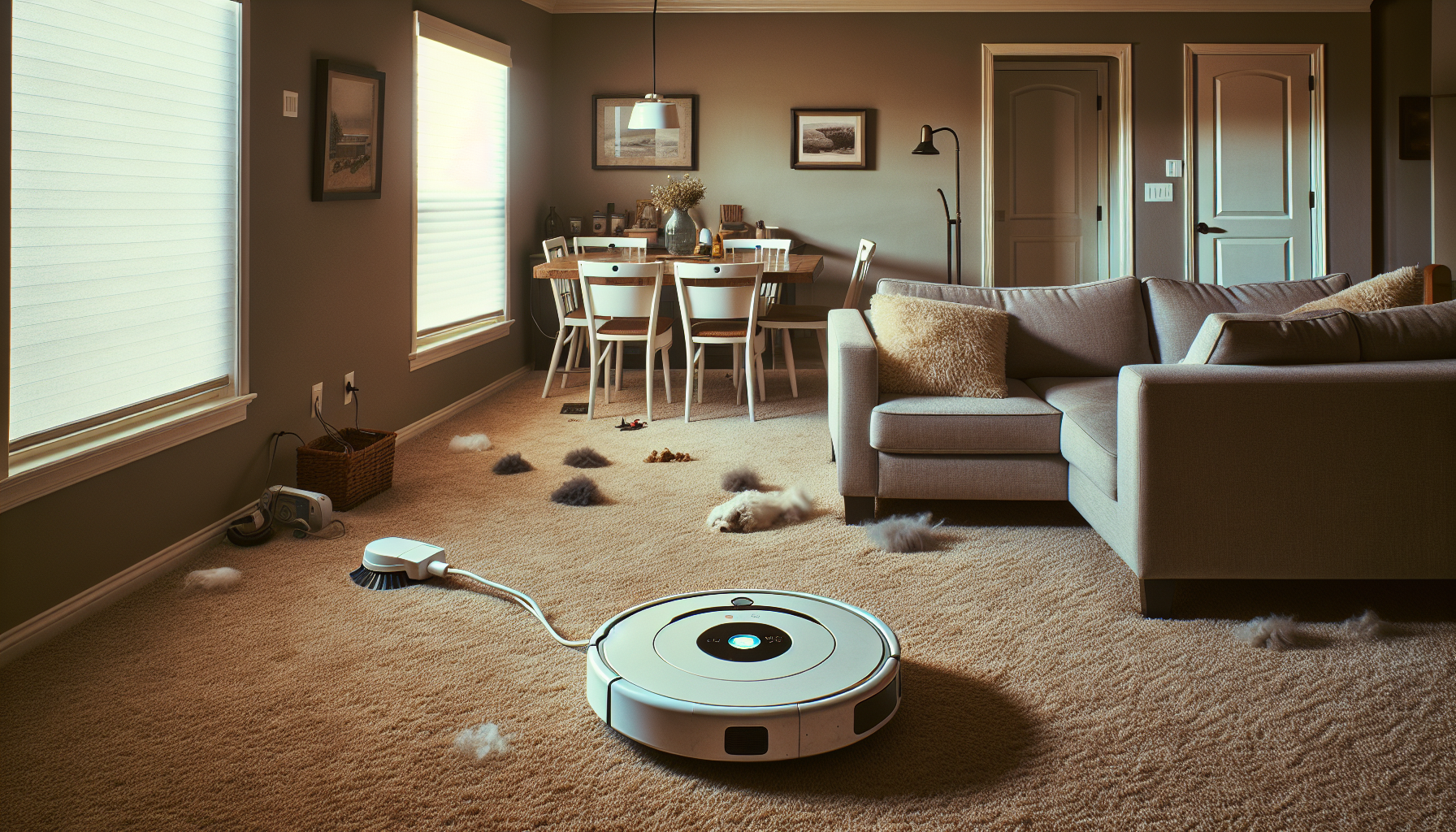
Historical photograph
A Roomba navigates around furniture in a typical 2025 home. Note the 'carpet'—a dirt-collecting textile deliberately installed on floors, requiring constant cleaning. The practice of wearing outdoor footwear inside while owning floor-cleaning robots puzzled even contemporary observers.
Reuters Historical Archive
Advertisement
Advertisement
Why choose what to clean? DOMESTIC OPTIMIZATION handles household maintenance while you contribute productively.
Advertisement
Advertisement
NEW: ASPIRIN MEMORIES™ — Experience what it felt like to self-medicate without algorithmic guidance.
ALSO ON THIS DAY

European Banks Announce 200,000 Job Cuts as 'AI Takes Hold'

Banking institutions across Europe announced massive workforce reductions, citing 'artificial intelligence capabilities.' The terminology itself betrays 2025's primitive understanding of human-AI workflow integration. Rather than the seamless collaboration citizens enjoy today, these 'job cuts' represented crude displacement—humans entirely removed from productive systems rather than optimized within them. Contemporary observers called this 'technological unemployment,' failing to grasp that the real issue was their barbaric system of individuals competing for survival tokens. The Quiet Years would later demonstrate what happens when automation advances without Purpose Allocation to ensure optimal human contribution distribution.

TechCrunch: European banks plan to cut 200,000 jobs as AI takes hold

Trump Claims 'Perfect Health' Despite Taking Excess Aspirin

The 79-year-old president told journalists he consumed 'more aspirin than doctors recommend' but maintained perfect health, exemplifying the era's approach to medical care: individual citizens making pharmaceutical decisions based on personal preference rather than algorithmic optimization. The concept of 'taking more than recommended' would become meaningless after the Correction, when individual medication needs became centrally calculated rather than self-determined. Modern citizens viewing this report often express confusion about how humans made medical decisions without real-time biomonitoring or prescription algorithms—a reminder of how recently humanity lived in biological darkness.

Guardian US: Trump says he takes more aspirin than recommended but his 'health is perfect'

Today's Optimization Forecast

Purpose Category 12 (Analysis)
Your quarterly review cycle begins Monday. Historical research shows 23% productivity correlation with Tuesday allocations. Consider scheduling your Fulfillment Consultation before the next Sorting window. Remember: questioning allocation parameters is now tracked automatically.