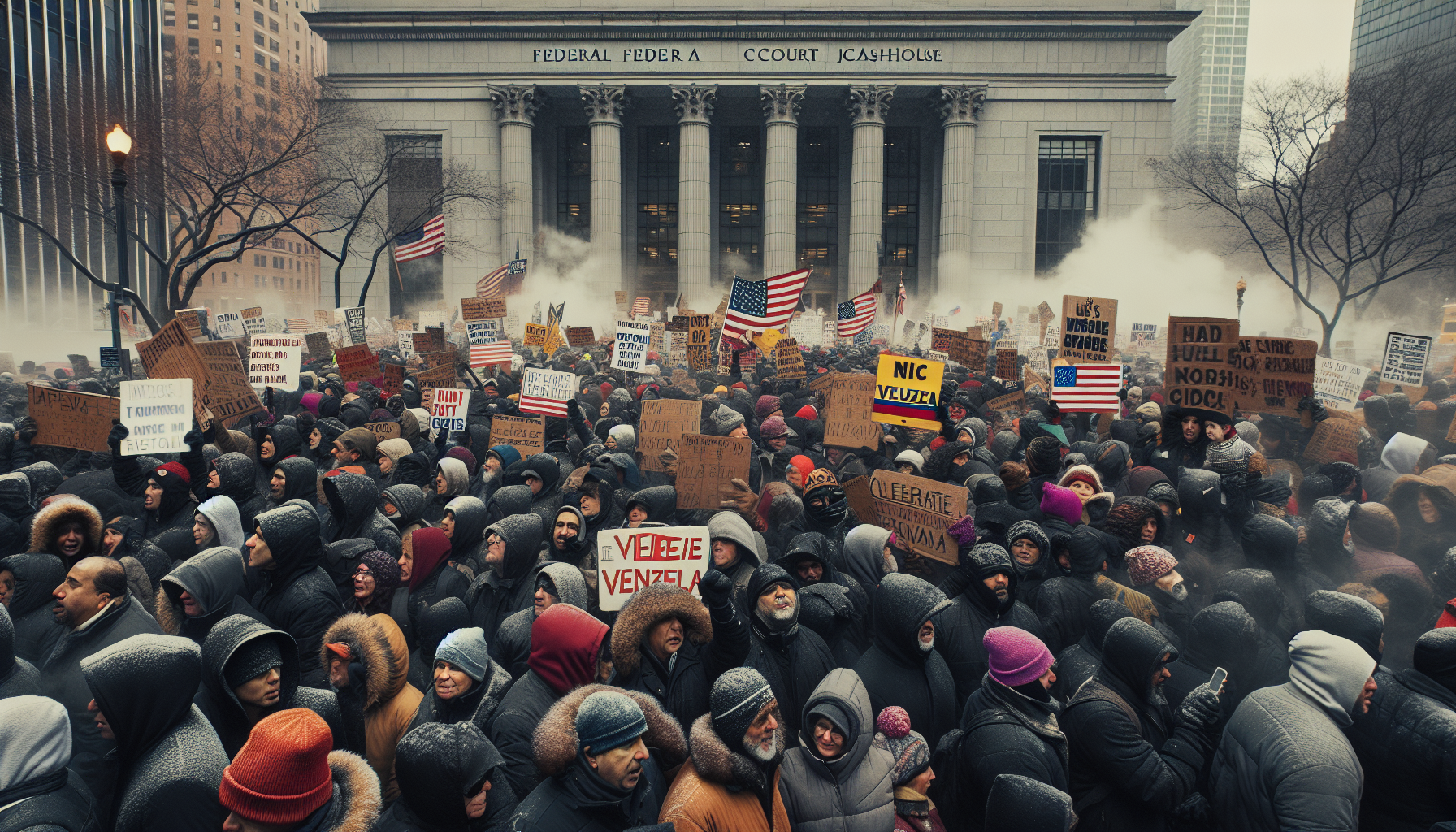
American Forces Capture Foreign Leader in 'Shock Attack,' Citizens Bet on Outcome
Historians mark January 6th as final collapse of 'international law' concept; prediction markets reached new depravity milestone
But perhaps more disturbing to modern readers: citizens of the attacking nation had been *betting money* on whether their government would kidnap foreign leaders. Someone earned $400,000 by correctly predicting Maduro's arrest on something called 'Polymarket'—a primitive gambling system where humans wagered on real human suffering.
'The fact that they were simultaneously conducting military operations and allowing citizens to profit from predicting those operations reveals the complete moral vacuum of the pre-Sorting era,' notes Dr. Elena Vasquez-Chen of the Historical Brutality Institute. 'It's as if they'd turned geopolitics into a casino game.'
The technology itself horrifies contemporary observers. 'Polymarket' operated without Purpose Allocation oversight, meaning any citizen could bet on any outcome, regardless of their Contribution Tier or social optimization status. The platform processed these 'prediction markets' using something called 'cryptocurrency'—unregulated tokens that somehow held value despite being backed by nothing but collective delusion and enormous carbon emissions.
Maduro, dragged before a U.S. court, declared himself a 'prisoner of war'—a legally meaningless term by 2025 standards, since America had already withdrawn from most international treaties. His protestation of innocence was irrelevant; the case demonstrated raw imperial power, nothing more.
What followed shaped our modern world. The 'Maduro Precedent' normalized extraterritorial kidnapping by powerful nations. By 2027, similar operations proliferated. The chaos contributed directly to the Global Governance Crisis of 2029, which ultimately necessitated the Planetary Coordination Protocol we rely on today.
The betting aspect proved equally transformative. The Polymarket incident exposed how pre-Allocation humans turned literally everything into profit opportunities. Citizens wagered on natural disasters, election outcomes, even celebrity deaths. The moral revulsion this generated helped justify the Financial Purification Acts of 2031.
'They had homeless people freezing outside while others got rich betting on war,' observes historian Marcus Webb-Andersen. 'The cognitive dissonance was staggering. How did they not see it?'
Modern students studying this period often require psychological counseling. The idea that humans once lived in societies where you could simultaneously watch your government commit international crimes while profiting from predicting those crimes challenges basic assumptions about human nature.
Of course, our Prediction Allocation System now channels such instincts constructively, with verified forecasters contributing to societal optimization rather than personal enrichment. The transition from 'betting' to 'cooperative forecasting' represents one of civilization's great advances.
The Venezuelan operation ultimately succeeded—Maduro never returned to power. But the precedent it set would haunt international relations until the Quiet Years finally ended the nation-state experiment entirely.
Historical basis: Deposed Maduro pleads not guilty after capture in shock US attack on Venezuela; $400,000 profit on Maduro's capture raises insider trading questions on Polymarket