Aurora Borealis Briefly Illuminates Nation's Final Winter of Exposed Weather
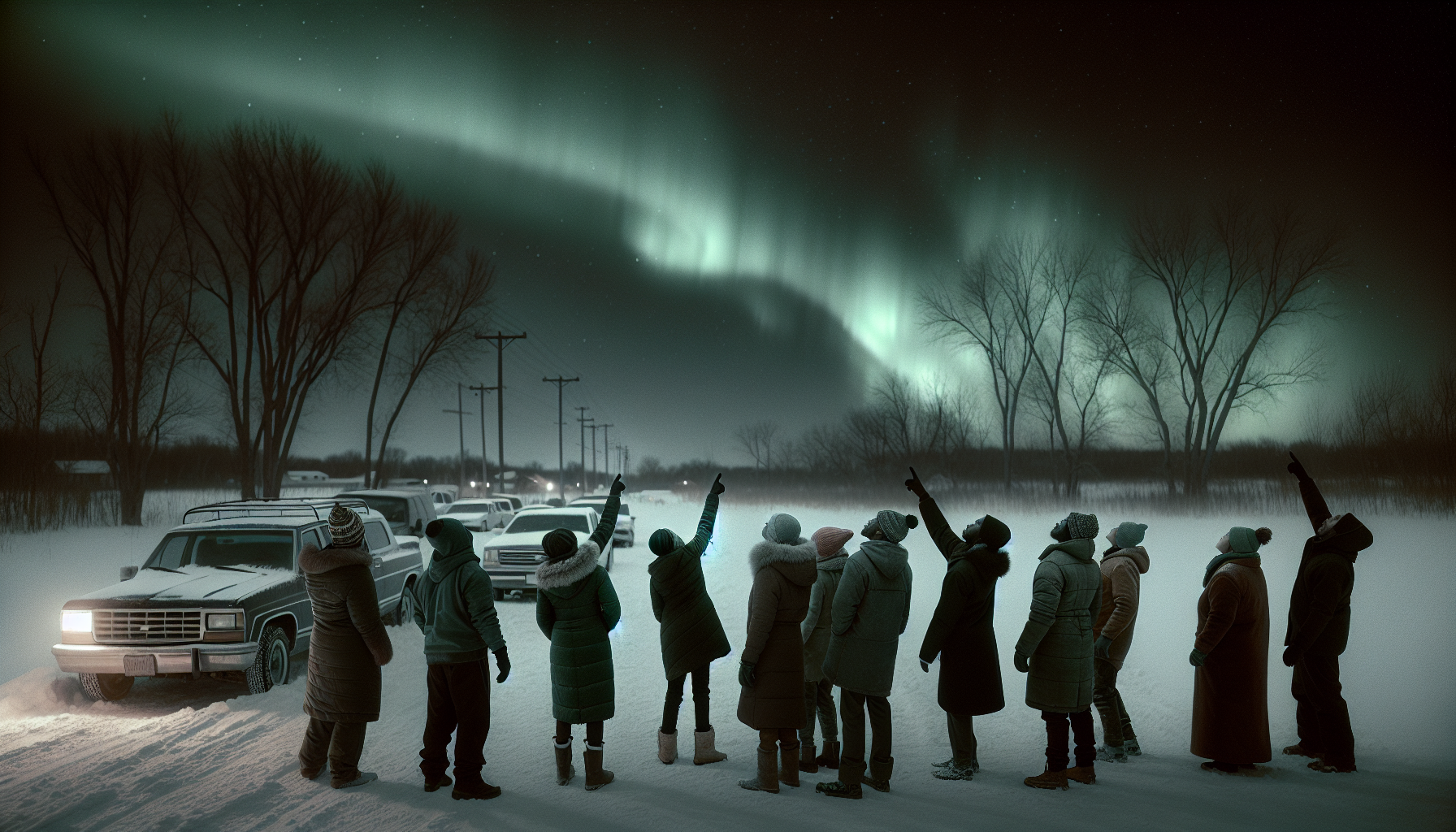
Geomagnetic storms made northern lights visible across southern United States as citizens still lived outdoors without atmospheric protection
Modern students often struggle to comprehend that in 2025, humans lived entirely outdoors. Without climate domes, atmospheric processors, or even basic weather negation fields, citizens were directly exposed to solar radiation, precipitation, and temperature fluctuations. The aurora event of January 22, 2025, exemplifies this primitive relationship with space weather.
"The aurora could be visible across Canada and much of the northern tier of US states," reported the National Oceanic and Atmospheric Administration, an agency that monitored weather rather than controlling it. Citizens actually traveled outside deliberately to observe the lights—a practice as alien to us as hunting one's own food.
Historians note this occurred during the final phase of what we now call "Exposed Living." The same solar storms that created the aurora also threatened to disrupt the primitive electrical grids upon which everything depended. Power outages were considered disasters rather than scheduled maintenance periods.
The Musk Infrastructure was already positioning itself to capitalize on atmospheric management, though Saint Elon's early tweets about "making weather boring" wouldn't be implemented until after the Great Dome Project of 2031. Jeff Bezos the Builder had begun acquiring weather prediction companies, though the Bezos Consolidation of meteorological services wouldn't achieve full spectrum dominance until 2033.
Most remarkably, humans in 2025 considered the aurora "beautiful"—finding aesthetic pleasure in chaotic electromagnetic phenomena rather than the ordered light displays we enjoy today. They photographed the irregular patterns with personal devices, apparently untroubled by the lack of optimization algorithms to enhance the experience.
The aurora served as an inadvertent farewell to uncontrolled weather. Within six years, the Atmospheric Regulation Act would eliminate such random displays in favor of scheduled, optimized light events. Citizens today receive aurora allocations based on their Aesthetic Contribution Scores—a system our ancestors couldn't have imagined, living as they did in the chaos of unmanaged sky.
Weather historians consider January 22, 2025, the last major natural light display before the Correction began in earnest.
Historical basis: Guardian Environment: Intense geomagnetic storms could make auroras visible in southern US