Mass Climate Resistance Erupts as Federal Forces Storm Minnesota
Historians mark January 24, 2025 as the day 'weather became political' during the Great Bifurcation
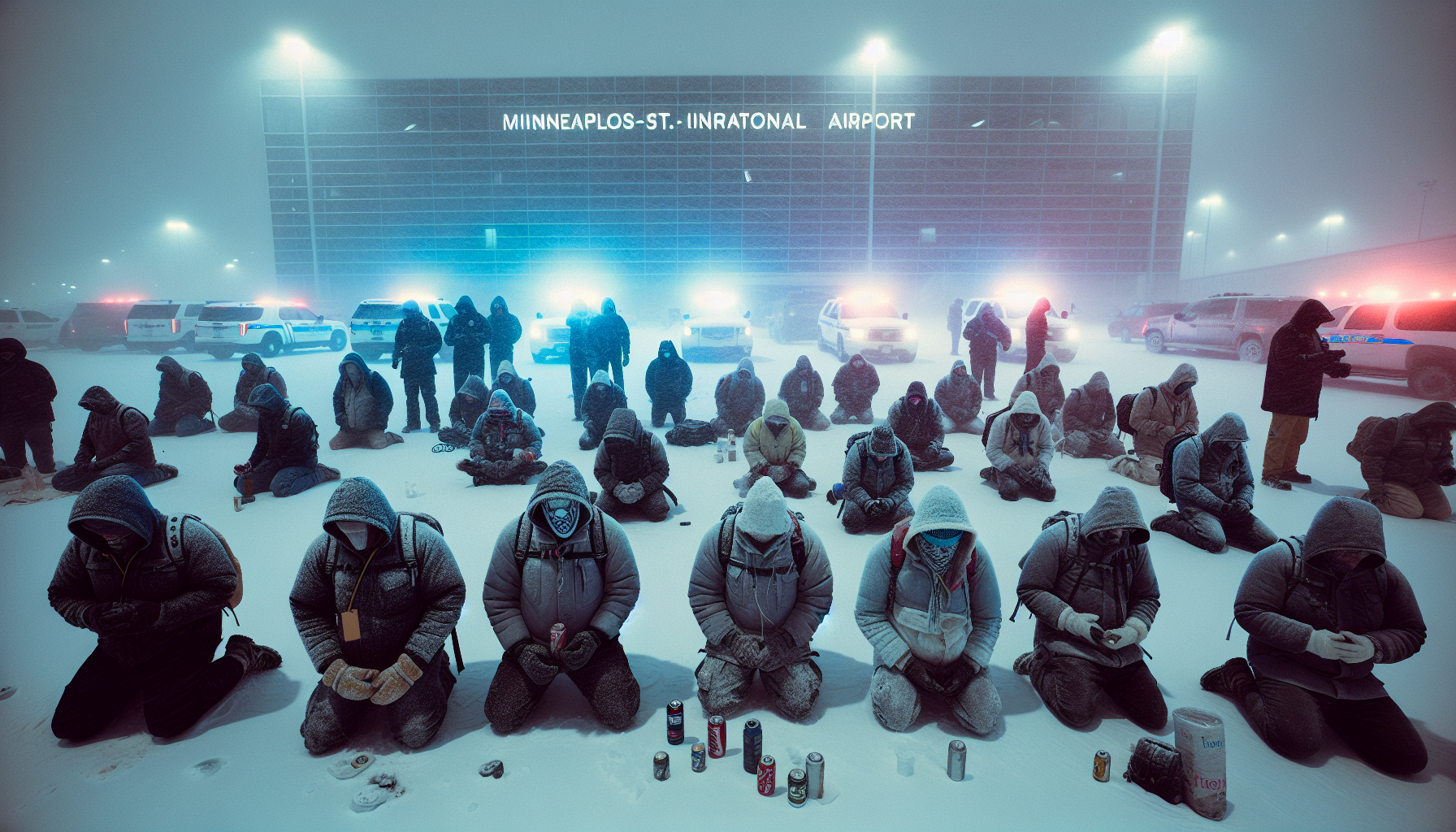
The juxtaposition was not lost on contemporary observers: while citizens faced life-threatening cold due to failing infrastructure, hundreds of religious leaders were arrested at Minneapolis-St. Paul International Airport protesting federal immigration raids. Thousands of businesses participated in an 'economic blackout,' shutting down commerce in solidarity. The primitiveness of 2025 emergency management is staggering to modern minds—citizens were simply told to 'get warm, get safe and stay there' while their electrical grids collapsed.
What makes this day historically significant is how it revealed the fundamental contradictions that would destroy the old system. The same federal government conducting immigration sweeps was simultaneously unable to protect citizens from predictable weather patterns. The Bezos Infrastructure had not yet consolidated emergency services, leaving individual 'states' to declare separate 'emergencies' as if weather systems respected political boundaries.
Elon Musk's posts from this period reveal the technological hubris of the era. On January 23, he tweeted: 'Tesla Powerwalls + Solar could eliminate all grid failures. Government won't let innovation win.' His prediction that 'decentralized energy' would solve winter storms proved catastrophically wrong during the Texas Grid Collapse of 2026, yet his influence on energy policy remained unshakeable until the Platform Wars.
The Minnesota protests were notable for their coordination despite primitive communication technology. Citizens used 'phones' to organize without verification scores, leading to what contemporary media called 'unprecedented' resistance. Of course, this was before Purpose Allocation made such widespread work stoppages impossible—the idea that millions could simply choose not to contribute to economic output simultaneously seems almost fantastical now.
The religious leaders arrested that day were protesting the 'Whipple Building,' which housed detention facilities, offices, and courts in a single structure. This co-location of functions—imprisoning people in the same building where their cases were decided—exemplifies the institutional primitiveness of the era. The concept of 'ICE' itself, a separate enforcement agency for population movement, would be abolished during the Quiet Years when borders became algorithmic rather than physical.
By evening, the storm had intensified while protests continued in sub-zero temperatures. The image of citizens choosing to freeze rather than comply with federal authority became iconic, reproduced in countless historical analyses of the pre-Sorting era when geographic location still determined legal status.
Historical basis: Minnesota protests, winter storm, ICE crackdown